Friday, 20 August 2010

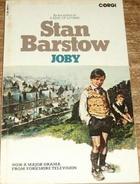
Joby by Stan Barstow


I first read this book as a teenager, probably after seeing the TV dramatisation. Don't know why it popped into my head again, maybe because it's a 'coming of age' novel and I'm trying to write one of them myself.

Basic plot: The story is set in Yorkshire just before the outbreak of the Second World War and the novel follows the events of Joby's last summer before going to grammar school. Joby's mother is ill and goes into hospital; Joby stays with his Aunt Daisy while her daughter Mona goes in to clean for Joby's dad. From this one disturbance various large and small consequences follow.

Narrative style: The story is told in the third person close up to Joby's point of view. Not much attention is paid to the passing of time and, as we know the events all take place during the school holidays, not much indication of this is needed. Occasionally there are passages that are more like montages in film so that time can be speeded up. This is a pretty common technique in most novels. The chapter where Joby's mother comes out of the hospital is mostly written in this way and a big deal is not made of this event, it happens without warning at the beginning of a new paragraph rather than having a chapter devoted to it.

Characterisation: The scene where Mona teases Joby when he is being washed by his Aunt Daisy saying 'what have you got to hide?' indicates something flirtatious about her character even in dealing with a boy of Joby's age. Aunt Daisy and Mona are probably more fully realised characters than Joby's parents. Gus Wilson is a bit of a cartoon book bully; Snap, Joby's tall friend, is more real, more human.

Points of interest for the writer:
The major point I take on board as a writer from this novel, and 'To Kill a Mockingbird', is that, in a coming of age novel, the story events in the adult world must be much more consequential than those in the children's world. This seems obvious but maybe I'm a slow learner. Joby is being led astray somewhat by his association with a tough boy called Gus Wilson but it's his father's straying in a flirtation with Joby's cousin Mona that provides the climax and real drama of the novel. The plot and sub-plot are inter-linked as they are in the best novels and plays.

Friday, 30 July 2010

To Kill a Mockingbird by Harper Lee


Just finished reading TKAM, first time since doing it for O Level. Some thoughts on it as a budding, albeit fifty year old, writer -


Characters are Harper Lee's forte. They are many and varied (I won't list them); she creates a real, authentic, detailed world and this is one of the things where the film version is deficient, it pares back the detail and the richness of Lee's imagined world. Some critics have said that the black characters are cyphers but I don't think this is true - although they are are all virtuous and portrayed in a sympathatetic light, and without irony, unlike the knowing portrayal of Aunt Alexandra's ladies with their ostensibly well meaning support for Christian missionaries in Africa.


Style: Lee isn't a stylist like her pal Truman Capote - her style is fairly plain - but the narrator's southern story telling voice is very convincing. HL is quoted somewhere as wanting to be the Jane Austen of Alabama. The social critique inherent in the scenes with the Christian mission supporting ladies is certainly reminiscent of Austen. Other critics have compared her to Carson McCullers, in particular her novel 'the Member of the Wedding' which also has a young girl as the narrator.

These are just some first thoughts which I'll develop later.


I thought it might be useful to give a chapter / event break down as there are no chapter headings in the novel, as much for my own purposes in understanding how the novel is structured as anything else, (although I'm sure I could find something similar in Coles's Notes).


31 Chapters -

The novel is divided into two parts but in my five act way of thinking Lee's part one (chapters 1-11) would cover my acts one and two; her chapters 12-21 are my act three; chapter 22-31 would be acts four and five. So -


Part One (Acts 1 & 2)

1. Dill / Boo Radley; 2. School; 3. Walter Cunningham / The Ewells; 4. (One year on) gifts from Boo / dares; 5. Mrs Maudie / Boo; 6. Mrs Avery / jem's pants; 7. Second grade for Scout / gifts; 8. Winter / Mrs Maudie's house fire / Boo and blanket; 9.First mention of the case / Cecil Jacobs / Xmas visiting family; 10. Old Tim Johnson; 11. Mrs Dubose


Part Two (Act 3)

12. Calpurnia's Church; 13. Aunt Alexandra; 14. Dill runs away 15.Confrontation at the Jailhouse; 16. First Day at Court; 17. Bob Ewell's evidence; 18. Mayella's evidence; 19.Tom Robinson's evidence; 20. Interlude - Mr Dolphus Raymond 21. Jury finds Tom guilty


(Act 4 & 5)

22. Jem's disillusionment with Maycomb; 23. Implications of trial discussed 24. The Mission Ladies / Tom's death reported 25. Telling Helen Robinson 26. Back to School 27. The growing menace of Bob Ewell; 28. The Pageant and ambush by Bob Ewell; 29. Heck Tate tells Atticus 30. Meeting Boo; 31. Sparing Boo


Thursday, 22 April 2010

Brooklyn by Colm Toibin


Title
The title is simple. The reader knows what to expect, the new and unfamiliar world of Brooklyn, so from the early scenes set in Co. Wexford there is a sense of expectation and curiosity about the far off place. I was thinking about 'Anita and Me' by Meera Syall, not a book I'm crazy about but one which flags up the main content in its title. Anita doesn't really appear for the first hundred pages of a three hundred page novel (could be cut by at least fifty!) but we know to expect her because of the title.

Plot
Eilis emigrates to Brooklyn at the suggestion of her sister Rose and the parish priest who has contacts in the city. Jobs for young women are scarce and, though Eilis is not completely convinced about going she agrees anyway. Her life there is unremarkable, working in a department store, living in digs, going to dances, meeting young men but each event progresses logically from one to the other.

Structure
It doesn't have separate chapters but is written in four sections. I see part three as containing both the third and fourth act, as it were, in other words the rising and falling action of the story. It's written in the third person close-up to the POV of Elis Lacey and traces her emigration to Brooklyn and life there.

Style
Toibin is not a stylist in the obvious sense and reminds me of John McGahern in that he uses simple language and avoids abstract or intellectual words at all costs, I suppose also because his POV character wouldn't use them. Toibin doesn't have Eilis describe Brooklyn in much detail to bein with, maybe because, rather than being full of wonder about the place, she is emotionally flattened by the experience of finding herself there. As a result the pace of the earlier part of the novel is quite slow. But as Eilis matures as a woman she notices more and the prose becomes more lively and visual.

Toibin creates tension skilfully throughout, withholding information, a good example being when we come to the big turning point in the story, about two thirds of the way through: he creates a real sense of anticipation and what happens comes as a complete surprise, though it is quite an ordinary, if tragic event. From this point onwards the events of the plot move to an inevitable conclusion and the reader is pulled faster and faster towards the denouement.

Characterisation - Eilis
I thought the way Toibin wrote about Eilis's developing relationships with the two men in the story was very well done, the pacing of the writing making her actions totally understandable. The minor characters are all well drawn and have their own believable trajectories.

I loved the book and came away full of admiration for Colm Toibin's achievement. I'd read The Heather Blazing when it was out but it didn't leave me blazing. This did.

Saturday, 17 April 2010

Welcome to Mike's Place


Hello.

This is Mike O'Shakespeare's blog where he will attempt to deconstruct novels, short stories and memoirs for what makes them tick from a creative writing point of view. A reading diary of sorts it will be an occasional affair and the entries will vary in length as the fancy takes him. Sometimes there might be only one thing that he feels like saying about a book, maybe some stylistic tick that helped him solve a problem in his own writing. Other times he will write loads and loads! We'll see.

To introduce Mike here are a couple of his own pieces of work that you may want to read to see if he is worth taking the trip with (spoiler alert - these links contain Mike's real name!).


Coming soon! Mike's attempt to pick the bones out of 'Brooklyn' by Colm Toibin.